
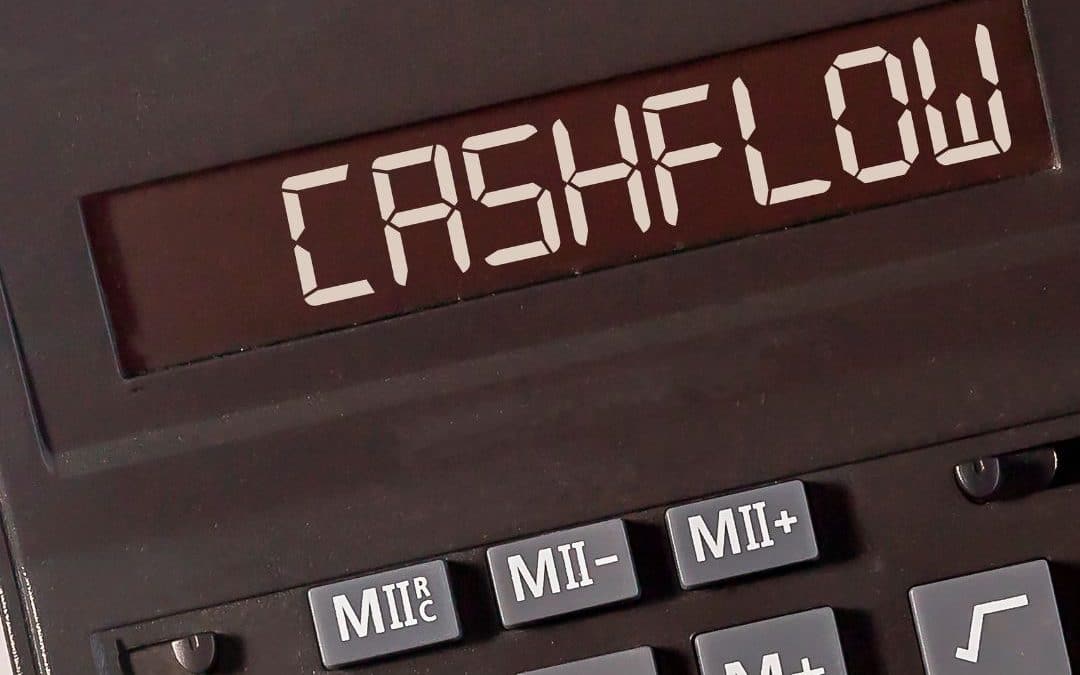
Edmonton Cash Flow Management for Businesses
Tracking Cash and Operating Expenses
When it comes to preserving cash, tracking the cash that you have, I would highly recommend we start looking at, you know, back in the old days when Grandma and Grandpa used to say, “There’s an envelope for the bank account. There’s an envelope for the tax man. There’s an envelope for this.”
Really have a close look at where your money is actually going in your business. If there is any time to be really prudent and understand the business expand and the liabilities of your business, now is the time to do that.
Make sure that you’re looking at your total operating expenditure, or your Opex. Make sure that you are frugal with that. Make sure that the employees, which is one of your most significant expenses on your profit and loss statement, make sure that those employees are giving you that return.
If there is any discretionary spending that you have right now, take a good look at all your expenses. Make sure that we are being pretty frugal with those expenses.
If you don’t have any non-essential expenses, or if you have any non essential expenses, let’s eliminate them if we can or even put them on hold.
And in terms, the last thing I’ll say in terms of expenses, if you have vendors, of course you’ve got your supply chain to consider. You’ve got relationships with that in that supply chain to consider.
Look for concessions. Nothing stops us from giving our vendors a call, speaking to them about opportunities to preserve some cash, and we’d be surprised what we can actually do.
But really focus critically on where your money is going and, of course, how much money we can continue to bring in. And if we’re not bringing any cash, what do we do with our current cash? How do we manage our current cash strategies?
Understanding Profit First
Why the System Makes Sense for Business Owners
You mentioned cash management is critical at this point in time there, and thank you for the plug for Dry Run. But you also a fan of a program out in the market called Profit First there. Why are you a fan of that program, and why does that make sense?
Well, the Profit First program is nothing new. It’s nothing unique. Profit First was founded by Michael Mallwitz, and Mike and I, you know, have had many discussions around why this is so powerful and why it’s so effective.
And the reason being is, you know, I use the envelope example, you Ed the bucket example earlier on, and when we go back in time, Grandma and Grandpa used to use very similar systems back in the Great Depression. Very similar systems where we would take the money we earn and assign it to critical areas that need the money that we need to pay the money to.
Profit First is a system and model that bucks the Axiom. And for those that don’t know what Axiom is, it’s just the way that it’s always been done, but not necessarily the way that it should be done.
And Profit First essentially starts with the focus on profit first. Are we actually building a profit in the business or accumulating wealth? And then moving down to making sure that the the owner of the business is paid, that we are putting money aside for taxes, and that we have enough money that we can actually associate and direct to the expenditure, overall expenditure of the operation.
Putting this in simplistic categories and being able to manage and allocate money accordingly, weirdly enough, sounds, well, that’s obvious. That’s common sense.
But it’s incredibly powerful.
Aligning Cash Management With Human Behavior
Paying Yourself and Building a Cash Cushion
And Jeremy, the reason why it’s in so powerful is because it works relative, or it work, it’s aligned with human behavior.
We are social creatures. We make decisions emotionally. Therefore, by selling or producing revenue just to pay expense or expenses, and hopefully have a profit at the end of the day, is not how we work.
We’ve got to be rewarded first. Pay ourselves. Establish some level of wealth accumulation, so we’re doing this for a reason, and then paying our bills.
And many people would say, “Well, what happens if I don’t have enough money to pay my bills?”
Well, the interesting part is that’s telling you that your business is not producing enough revenue to actually pay its expenses.
So Profit First, I mean, it’s a lot more powerful than that. I’m not doing it as much justice as I could, but ultimately it’s a system that has taken many out of a financial crunch and put their business in an incredibly strong position from a cash basis.
When you business owner speaks to their accountant, and accountant says, “Well, well, you know, we may, you made, the business made a great profit this year, whether it’s gross or whether it’s net operating income,” but we go to our bank account and we started looking for the cash. For somehow some reason, we don’t see the cash in our bank accounts.
And this is a lot of stress for a lot of business owners.
And the reason is primarily because, one, we they accountants and bookkeepers work within a world of gap, work within a world of accounting. On the other hand, business owners don’t live in that world necessarily.
So being able to reconcile those two different worlds and actually start producing a profit in your business, which is the accumulation of a cash cushion, is what Profit First is all about.
So a very powerful system.
Why Businesses Fail and How to Stay Viable
Managing Cash Through Crisis and Uncertainty
Well, and I can relate it to the impact on why businesses fail.
Number one reason, 42% of the reasons businesses fail is they don’t actually have a viable product there or service. So the world’s just saying that, hey, your business is not something that we desire.
And people go out there, and I can think of all kinds of like, little knickknack type businesses that you see businesses driving down the street that that location switched out five times in the last 10 years, and you’re like, how? Why does anybody buy that?
So I could see that part.
So viability, really focusing on is viable, and can you meet your expenses? Then maybe it’s not a viable product.
And number two is cash, managing cash. And so that’s near and dear to our heart. 30% of businesses failed, they say that it’s due to mismanagement cash.
Scary thing is 70% of those businesses are actually profitable. It’s just they didn’t keep an eye on it, especially in crises like this.
So it’s expected that half of businesses will fail normally in a five year period of time. I expect over the next two years we’re going to see a big spike in that because people just weren’t prepared or ready for how this came out of the, you know, just came out of nowhere and hit many of us there.
And so we’re scrambling to deal with it.
So check out Profit First. And if you’re looking for business advice, I would definitely recommend you get in touch with Bruce Baker. His website is triple w. for work places.com. That is the number four, www.4workplaces.com.
He and his team would be happy to talk to you about and making sure that you can build scale and keep viable in your business.
Thank you very much for this, Bruce, and you have yourself a great day.
Thanks for having us, you two, Jeremy. Take care, folks.
The Business Builders by Workplaces
Ready to talk about your business?
Pick a time that suits you. No pitch and no pressure, and you leave knowing whether we are the right fit.
Book a conversation